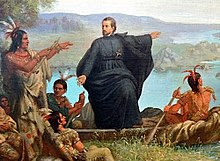
About Me

Graduate student at Missouri State University working on an M.A. in History. I am also working on a second B.A. in Religion and Cultural Studies with a minor in Anthropology at University of Central Florida.

I currently have a Bachelor of Arts in History/Minor in Judaic Studies from the University of Central Florida and an Associate of Arts in History from Pensacola State College. I have completed a one year certification course in Biblical Hebrew through the Hebrew University of Jerusalem and Certificates in Eastern Christian Traditions and Sacred Scripture from Newman Theological College.

I have studied French to the Intermediate level and am currently studying Biblical Hebrew, Koine Greek, and Turkish.

Tuesday, December 7, 2021

Khirbet Qumran: A New Interpretation of Purpose


Khirbet Qumran:

A New Interpretation of Purpose


John C. Haynes, Jr.

JST-3144: Dead Sea Scrolls

Dr. Kenneth Hanson

December 4, 2021

                                                                                                                                                          1

Khirbet Qumran

Since the initial discoveries of the Dead Sea Scrolls in 1947, scholars have offered and debated numerous theories as to the purpose of the location of the main concentration of scrolls and the center of what appears to be a sect of Judaism, Khirbet Qumran. Qumran is located on the west bank of the Jordan River near the Dead Sea, giving the popular name to the scrolls found in the caves nearby the Qumran site. The structures located at Qumran are varied in size and formation and have led to varying ideas about their purpose. Recent archaeological evidence along with historical and textual analysis have led to the theory that the Qumran structures themselves were not used to house a large sectarian community but was employed primarily as a meeting place for annual covenant renewals and festivals for all the scattered members of the sect to converge upon. While there may have been a small number of members who remained at the site year-round, and larger numbers who lived in nearby caves, the majority of sectarians were scattered across the Judaean countryside in what were referred to as “camps.”

Initial archaeological excavation of the Qumran site was completed between November 24 and December 12, 1951, by Father Roland de Vaux of the Ecole Biblique.[1] Initial findings included pottery fragments and jars that linked the structures at the site to the nearby caves where the scrolls were found. The site itself would prove to be much more complex as well as controversial and would result in numerous theories as to its purpose. Controversy and complexity would arise because Fr. De Vaux died before publishing his complete findings. This left scholars with incomplete data and analysis to use when looking at De Vaux’s theories. A

                                                                                                                                                          2

summary of what was found at Qumran included a few structures that could be identified as living areas,[2] several large public buildings that could have been used as dining areas (these contained large amounts of serving vessels) and one that de Vaux identified as a scriptorium, several large Mikva’ot, or ritual purity baths (sing. Mikveh), a large open  plaza, and several cemeteries.[3] The dining areas, Mikva’ot, and plaza could well serve thousands of individuals. One of the largest cemeteries contains the graves of over 1,100 individuals. Noticeably absent in the complex, however, are large numbers of living quarters.

            Some of the popular theories that have been suggested include the ruins of a fortress, proposed by Norman Golb of the University of Chicago. Fr. De Vaux initially agreed with this analysis, however upon further research decided against this.[4] Husband and wife archaeologists Robert Donceel and Pauline Donceel-Voute concluded that the Qumran site was a wealthy villa with a large dining room,[5] although this theory seems unlikely and does not have many supporters. Other theories include that of an agricultural community and a perfume factory. None of these ideas fully match the complete archaeological and historical data of the time.

Archaeological Evidence and Analysis

            None of the proposed theories for the purpose of the Qumran site have gained significant consensus over the other since the beginning of the archaeological excavation.[6] Although lacking

                                                                                                                                                          3

a final report, the theory that stands on firmest ground is that of the original excavator, Father Roland de Vaux. Recently, new expansions on De Vaux’s archaeological findings, based on textual analysis of the Dead Sea Scrolls themselves, have led to a slight revision of original theories. When analyzing the archaeological data, De Vaux identified the following periods of construction:[7]

            -Phase Ia: a few remains from early occupation from the period c. 140 BCE.

-Phase Ib: beginning around the reign of the Hasmonean ruler and high priest John Hyrcanus, 134-104 BCE, and included a small number of accommodations that were destroyed by either fire or an earthquake and subsequent fire.

-Phase II: after the earthquake, the site was abandoned until the time of the death of King Herod, 4 BCE, and remained occupied until 68 CE.

-Phase III: Brief Roman occupation.

De Vaux viewed the site beginning with Phase II as a communal site but not for permanent residence. The structures included communal dining and meeting areas, but he thought that residents would live in makeshift shelters on the surrounding grounds.[8]

            Jodi Magness, in her book The Archaeology of Qumran and the Dead Sea Scrolls, largely agrees with Father de Vaux’s findings, although she does disagree with and modifies his phases of construction:

                                                                                                                                                          4

1.      She finds that there was no period corresponding to Phase Ia.

2.      Magness believes that the site was sectarian from the beginning and began between 100 and 50 BCE.

3.      She does not believe there was such a significant gap in settlement between Phase Ib and Phase II. Also, she finds evidence for a separate earthquake and a fire. An earthquake in 31 BCE led to a partial abandonment of the site, and a subsequent fire led to a second abandonment with a reoccupation the same as De Vaux’s, after the death of Herod in 4 BCE.[9]

Magness notes that the Qumran site is particularly devoid of residential quarters. Of those that could have been residences, they have instead been purposed for some specific use: workshops or communal purposes.[10] As with all other scholars who accept the basic premise of De Vaux, Magness is at a loss as to where the sectarians would have slept, noting like others that, except for those who lived in the nearby caves, the rest likely slept in tents and other makeshift shelters.[11]

            Daniel Vainstub, archaeologist with Ben Gurion University, has recently proposed a new theory as to the purpose of the Qumran site. Agreeing with the De Vaux/Magness archaeological analysis, Vainstub incorporates textual analysis of the Dead Sea Scrolls to theorize that Khirbet Qumran, while maintain no more than a couple dozen permanent residents, was used primarily as an annual gathering site for all the community members when they held their required Covenant

                                                                                                                                                          5

Ceremony. Prior to Vainstub’s work, some scholars had made tentative steps in that direction by suggesting that the site was used as “a study center for all members” or a “ritual purification center.”[12] However, Vainstub goes a step further to make specific claims about the purpose of the site. It also reveals more about the structure of the sect and how it operated.

            Key to Vainstub’s analysis is taking a look at what the scrolls themselves have to say about the sect. He argues that both the Community Rule scroll and the Damascus Document[13] scroll both reveal an annual requirement for members of the sect to gather together for a renewal of their covenant vows.[14] Along with the annual gathering, chief among the clues found in the scrolls are the pronouncements to the people in the “camps.”

The Dead Sea Scrolls

            The primary source for understanding the annual Covenant Renewal requirement is found in the Community Rule, both in the fragment found in Cave 1, but mostly the fragments found in Cave 4. The text reveals this solemn covenant as sealing the relationship between God and His chosen “Sons of Light” and is viewed by the sectarians as a continuation of the covenants made by the people of Israel with God.[15] According to Vainstub, the annual renewal was a halakhic obligation and failure to do so would constitute expulsion from the community.[16] According to


                                                                                                                                                          6

the Community Rule, each member would renew this covenant on a yearly basis for “this is the time for the preparation of the way into the wilderness.”[17]

            The Damascus Document reveals that not all members of the community lived at Qumran. Indeed, full members of the sect lived in “camps” throughout Judea, and all were connected by the same covenant and the yearly covenant renewal. In fact, it seems likely that there were some modifications of the rules for those that lived in the “camps.” Vainstub believes this to be the case and states that not only do these members come from various places, but that they also follow different types of rules and different social codes.[18] The Damascus Document provides a section entitled “This is the Rule for the Assembly of the Camps.”[19] These rules call for groups of at least ten men, led by a “Guardian.”[20] This is the extent to which the Cairo Document goes into detail about the camps.[21] The scroll fragments from Cave 4 give further instructions and information.

            The Damascus Document gives instruction for all “[the] holy in their camps…” to gather for the annual meeting in the month of Sivan.[22] Implicit in these instructions is the idea that most members of the sect lived outside of Khirbet Qumran, in camps of 10 or more men, and were required annually to travel to Qumran to partake in the annual covenant renewal ceremony. The

                                                                                                                                                          7

Dead Sea Scrolls refer to these as “the assembly of the camps,” that is מושב הרבים. The word Moshav, מושב (my transliteration) is used in terms of an “assembly” here, while having an original connotation as an “agricultural community.” The term Ravim, הרבים (again, my transliteration, here it is Ha-Ravim)[23] remains untranslated even with several sources, but is given as “the camps.”[24] The numbers of sectarians making the trip to Qumran may have numbered in the several hundreds to even the thousands and would need provisions for anywhere from a few days to even a week.[25] Vainstub argues that these sectarians would have to arrive in time for Shabbat, followed by the Shavuot festival. The covenant renewal ceremony would then follow.[26]

Conclusion

            Before continuing on to concluding remarks, I need to make a statement regarding sources used. More specifically, sources not used. I have not alluded to or referenced Flavius Josephus in this paper. This is not to say that I find his work to have no historical significance. However, I have attempted to work within the confines of verifiable data from archaeology and the Dead Sea Scrolls themselves. The only item of significance that Josephus would provide for this work is his identifying of the Qumran group as the Essenes. Whether the sectarians at Qumran were themselves Essenes or related to a branch of Essenes is still an unverifiable piece of information. Daniel Vainstub identifies the Qumran group as the yachad sect. Whether the

                                                                                                                                                          8

Essenes or some other group, I have focused only on the purpose of Khirbet Qumran as can be determined from archaeological data and analysis provided by De Vaux and Magness and textual analysis by Daniel Vainstub as well as my own (limited) ability.

            From archaeology, we can see that the site at Qumran comprised several buildings which included large areas intended to feed significant numbers of people. In addition, assembly rooms and Mikva’ot present would not be necessary for small groups. A large plaza (or esplanade as some call it) would serve as grounds for thousands of individuals to make temporary encampments and the numbers of serving vessels found would indicate the need to feed these people. The Dead Sea Scrolls themselves, particularly the Community Rule and the Damascus Document provide insight into the requirement of the Qumran sect to gather annually for a renewal of their covenant vows. The Damascus Document also makes clear that many, if not most, members of the sect lived scattered across the Judaean countryside in small groups called “camps.” While there is no direct evidence to date, it is likely that a small core group of sectarians lived at Qumran, seeing to the grounds, and preparing for the meeting. Many likely may have been involved in copying of scrolls. A significant number likely lived in the nearby caves around the Dead Sea and were also involved in copying and studying Torah. The structural and textual data point to the use of the site as a gathering place for large numbers of the community on an annual basis to celebrate the festival of Shavuot followed by the necessary renewal of their “new” covenant with God.


Bibliography

Boccaccini, Gabriele. Beyond the Essene Hypothesis. Grand Rapids: Wm. B. Eerdmans

“Community Rule Transcripts from Cave 4.” The Complete Dead Sea Scrolls. Trans. By Geza

Vermes. London: Penguin Books, Ltd., 1962Publishing Co., 1998

“The Damascus Document.” The Complete Dead Sea Scrolls. Trans. By Geza Vermes. London:

Penguin Books, Ltd., 1962

Magness, Jodi. The Archaeology of Qumran and the Dead Sea Scrolls. Grand Rapids: Wm. B.

Eerdmans Publishing Co, 2002

Vainstub, Daniel. “The Covenant Renewal Ceremony as the Main Function of Qumran.”

Religions, 2021:12(8), 578

Vanderkam, James. The Dead Sea Scrolls Today. Grand Rapids: Wm. B. Eerdmans Publishing

Co, 1994


[1] Vanderkam, James. The Dead Sea Scrolls Today. Grand Rapids: Wm. B. Eerdmans Publishing Co, 1994. 15.

[2] These living quarters would support no more than perhaps a dozen sectarian members living there full-time, as agreed upon by most scholars (see also Nathan Steinmeyer, “Qumran’s True Purpose Discovered?” in Bible History Daily. September 20, 2021. Biblical Archaeological Society.

[3] Vanderkam, James. The Dead Sea Scrolls Today. Grand Rapids: Wm. B. Eerdmans Publishing Co, 1994. 25-26.

[4] Ibid. 27.

[5] Ibid. 28-29.

[6] Boccaccini, Gabriele. Beyond the Essene Hypothesis. Grand Rapids: Wm. B. Eerdmans Publishing Co., 1998. 3.

[7] Vanderkam, James. The Dead Sea Scrolls Today. Grand Rapids: Wm. B. Eerdmans Publishing Co, 1994. 21-22. (This includes all of the phases of construction data that follows).

[8] Ibid. 24.

[9] Vanderkam, James. The Dead Sea Scrolls Today. Grand Rapids: Wm. B. Eerdmans Publishing Co, 1994. 26-27.

[10] Magness, Jodi. The Archaeology of Qumran and the Dead Sea Scrolls. Grand Rapids: Wm. B. Eerdmans Publishing Co, 2002. 55.

[11] Ibid.

[12]   Boccaccini, Gabriele. Beyond the Essene Hypothesis. Grand Rapids: Wm. B. Eerdmans Publishing Co., 1998. 3.

[13] The portions related to the covenant renewal are missing in the Cairo document, but the relevant texts are contained in the fragments found at Qumran, 4Q266, 4Q269, and 4Q270.

[14] Vainstub, Daniel. “The Covenant Renewal Ceremony as the Main Function of Qumran.” Religions,

2021:12(8), 578. 2.

[15] Ibid.

[16] Ibid, 3.

[17] “Community Rule Transcripts from Cave 4.” The Complete Dead Sea Scrolls. Trans. By Geza Vermes. London: Penguin Books, Ltd., 1962. 121.

[18] Vainstub, Daniel. “The Covenant Renewal Ceremony as the Main Function of Qumran.” Religions,

2021:12(8), 578. 2.

[19] “The Damascus Document.” The Complete Dead Sea Scrolls. Trans. By Geza Vermes. London: Penguin Books, Ltd., 1962. 143.

[20] Ibid. 144.

[21] See Footnote 13.

[22] Vainstub, Daniel. “The Covenant Renewal Ceremony as the Main Function of Qumran.” Religions,

2021:12(8), 578. 4.

[23] הרבים is Ha-Ravim, that is “The” Ravim. The root is Resh-Bet-Yodh-Mem.

[24] Vainstub, Daniel. “The Covenant Renewal Ceremony as the Main Function of Qumran.” Religions

2021:12(8), 578. 5.

[25] Ibid.

[26] Vainstub, Daniel. “The Covenant Renewal Ceremony as the Main Function of Qumran.” Religions

2021:12(8), 578. 4.

Monday, December 6, 2021

Jesuits in the New World: A Contrast in Conversion of North and South America


Jesuits in the New World:

A Contrast in Conversion of North and South America


John C. Haynes, Jr.

HIS-4150: History and Historians

Dr. Amanda Snyder

December 2, 2021


                                                                                                                                                          1

European Exploration and Expansion

            European exploration of the New World began in the fifteenth century CE and continued into the sixteenth century as the emerging naval powers of Portugal, Spain, France, England, and the Netherlands allowed these countries to discover, as it was a new discovery for them, the lands of North, Central, and South America along with the islands of the Caribbean. Catholic missionaries established missions in these areas with the intent of converting the indigenous populations to Christianity as well as to influence them to adopt European values. This paper will compare the success of Jesuit missions in New France (Canada) and South America. Those missionaries who were sent to North America, primarily Canada, faced a hostile native population and overall failed to have any major success in bringing native Americans into their missions or converting large numbers. However, in South America, a much greater number of natives flocked to the missions (called reductions, Spanish reducciones) and converted, particularly in the areas of present-day Brazil (along the Portuguese/Spanish border, Paraguay, and Uruguay. While there were many cultural differences that account for the contrasting relationships between the native populations and the European colonizers of North and South America, the primary reason for the large influx of South American indigenous to the Jesuit reductions was a reaction to the Portuguese slave trade. Guarani, in particular, fled to the reductions in an effort to escape the slave traders and converted to Christianity with the hope that, if caught, they would not be sold into slavery due to their conversion.

Initially, the European nations took to the seas seeking new routes to the Indies in search of trade in spices and other goods. Upon realizing they had stumbled upon a “new world” which would soon come to be called the “Americas,” named after the famous Italian explorer Amerigo    

                                                                                                                                                          2

Vespucci, the European explorers hoped to find gold, silver, and other raw goods with which they could trade. What they did find was a land full of native peoples, whom the Europeans had never encountered and who had never encountered others outside of their regional homes. Collectively, we can refer to these peoples as “Native Americans” although they were culturally as different as the English were from the Spanish. This encounter of cultures, along with the European drive for profit from trade, would soon lead to cultural exchanges that were often violent.

Along with officials, merchants, and soldiers, the European nations also sent missionaries. Primary amongst the Catholic missionaries who deployed to the Americas were the Dominicans, the Franciscans, as well as the Jesuits. The order of the Jesuits, the Society of Jesus, was founded by St. Ignatius of Loyola. Ignatius was a Basque army officer who, wounded in battle, turned to the spiritual life, and became a Catholic priest. He and seven companions formed a new order in 1540 dedicated to service to the Pope and the conversion of non-Christians. This small order, who initially Ignatius called simply in Italian a “compagnia di Gesu” or “brotherhood (Company) of Jesus” would soon grow to become an army of priests dispatched around the globe with the purpose of conversion and become officially known by the Latin form of compagnia di Gesu, the Societas Iesu, the Society of Jesus.[1]  Many early references to the order give the name Company of Jesus, as it was often called in its early days, based on the Italian statement.[2]

                                                                                                                                              3

While all Jesuits are led by and answer to the head of their order, the Superior General, the individual provinces of Jesuits, generally along national lines, are colored by their cultural and national histories and exhibit differing natures, as much as is possible. Thus, in the sixteenth and seventeenth centuries, we find that Jesuits from different countries, relocating to different areas of the Americas, brought with them different political and cultural values, all still consistent under the banner of the spirituality of the Society of Jesus. For purposes of comparison, this paper will be focusing on the French Jesuits who operated in North America, specifically the area along the St. Lawrence River, which they called “New France” and is today in Canada, and the Spanish Jesuits who entered South America and established their missions in the regions of present-day Brazil, Paraguay, and Uruguay. French Jesuits in New France, while having some small degree of success in gaining converts to Christianity and spreading European influence, were largely unsuccessful in winning over the majority of the native population. While different tribes reacted in diverse ways to the mission of the Jesuits, this paper will look primarily at the Hurons along the St. Lawrence River. In contrast, the Spanish Jesuits of South America were largely successful in conversion and integration with local populations. Here, I will discuss primarily the Guarani tribes along present-day Brazil, Paraguay, and Uruguay. Large numbers of Guarani relocated to Jesuit reducciones or reductions voluntarily and converted to Christianity.

French Jesuits in North America


                                                                                                                                              4

One of the first Jesuits to arrive in New France was Fr. Paul Le Jeune. By his own accounts, relations with the Hurons were initially cordial, but not productive.[3] That would soon change, however, as the missionaries began to encounter both the Iroquois and the Algonquin tribes. The Jesuit order had a rocky start in France and was often opposed by the French monarchy and government.[4]  Support from Europe was lackluster and large colonial centers simply failed to materialize. In addition, French colonists never numbered very highly in this region, most departing for French colonies in the Caribbean. Estimates place approximately 70,000 settlers from France in the area of the St. Lawrence River, including the city, which was to become the chief population center, Quebec.[5]  Due to the lack of strong government support and small numbers of colonists, French colonizers never built a substantial infrastructure in New France and the Jesuits there, small in number to begin with, did not have the support they needed. Small teams of Jesuits were often on their own, making their way through the native wilderness.

The Jesuits first encountered the Huron along the St. Lawrence, and later the Iroquois, who were enemies of each other. Initial contact and attempts at conversion among the Huron were mostly friendly, however the Hurons were less willing to accept conversion. While reports


                                                                                                                                                          5

back to their superiors were hopeful, the reality on the ground showed that the Huron were not desirous of accepting Christian ideas. In a 1636 letter from Fr. Jean de Brebeuf, another early Jesuit missionary, the indigenous response to Christianity was that the European religion was not their “custom.” A reply from an unknown native was “your world is not our world.”[6]  While missionaries did make some inroads into native culture and have some small success in winning converts, the Jesuits soon found themselves facing hostile, even violent, conflict as well as deeply embroiled in the politics and wars between the Huron and Iroquois nations. Push back against conversion as well as political infighting often led to the death of many French Jesuits, including the martyrdom of Fr. Jean de Brebeuf.[7] Another letter from Fr. Brebeuf, written in 1637, described an epidemic that swept the native populations and the blame that was placed on the Europeans for having caused it.[8] According to Dubois, however, both the Huron and the Iroquois “remained populous, strong, and autonomous” nations even after the epidemic.[9]  It seems the French and native populations developed a relationship of interdependence upon each other that took the form of an “intercultural alliance.”[10]


                                                                                                                                              6

The primary methodology used by French Jesuits was twofold: that of political diplomacy as well as philanthropy.[11]The Jesuits were simply never able to convert the indigenous peoples to Christianity wholesale. Notwithstanding years of violent conflict and hundreds of missionaries killed, the Europeans and natives settled into an uneasy relationship of acceptance. There never were large numbers of French in New France to begin with. For assorted reasons, the majority of French colonists preferred the Caribbean as a region to colonize. Perhaps due to the rugged terrain and climate of Canada, the violence with the native peoples, or the difficult trade in furs as the primary source of trade, or perhaps a combination of all three, led to the sparse numbers. This, combined with the history of war, epidemic, and the Huron resistance to Christianization led to the decrease of conversions and the failure of missions, at least in the eyes of the European Catholics and as compared to other regions of the New World.

Spanish Jesuits in South America

The Spanish maintained a much firmer control over South America than did their French counterparts in New France. Spain began to colonize the area earlier than the French, greater numbers of officials, both civilian and military, came to the Americas, and of those that did, they established an encomienda infrastructure.[12] The encomienda was a land grant given to a Spaniard for a specific area that allowed him to collect resources and taxes. The holder of the grant, an

                                                                                                                                                          7

encomendero, could also utilize labor from local indigenous villages. In exchange for work, taxes, and resources, the encomendero provided military protection and religious instruction.[13] The area of South America became divided primarily between Portugal, which had claimed modern-day Brazil and the Spanish, which claimed the rest of the continent. The government of Portugal did not desire to officially colonize Brazil preferring instead to offer large land grants to wealthy individuals.[14] The border between Portuguese Brazil and the remainder of Spanish South America was often in dispute and would play a significant role in the events affecting the lives of the native tribes, in particular the Guarani people who lived along this border in Brazil, Paraguay, and Uruguay.

            When Spanish Jesuits arrived in this area, they established missions which they called reducciones, translated as “reductions.” Like the encomienda, the reductions provided both protection and religious instruction. The Jesuits arrived in South America in the mid-1500’s and by the early seventeenth century established a number of missions and centers of learning in the area that was home to the Guarani.[15] In The Guarani and their Missions: A Socioeconomic History, Julia Sarreal argues that the Guarani missions in what is called the Rio de la Plata region, were the most successful of all the Jesuit missions in terms of “number of indigenous


                                                                                                                                                          8

inhabitants, economic prosperity, and historical importance.”[16] The first members of the Society of Jesus to enter Paraguay were three Spanish Jesuits and three Italian Jesuits, led by Father Diego de Torres.[17] This information, and much of what is known of those early years were documented by Father Antonio Ruiz de Montoya, a Jesuit of Spanish descent who was born in Lima, Peru. Father de Montoya is known for his prolific writing on the history of the Jesuit missions as well as his defense of the indigenous Guarani.

The first Guarani reductions began in 1609 and reached their peak population of approximately 140,000 in 1723.[18] The Guarani relocated to these missions, mostly of their own accord, and were converted to Catholicism receiving an education, protection, and medical care. The native population within the reductions provided labor and received food and supplies from a communal storehouse. The primary difference between the encomienda and the reducciones was that labor on the encomienda was often forced producing for the benefit of the landowner. The Jesuit missions were established and often ran similar to a communal life of mutual benefit. This certainly helped sway the Guarani to relocate to the reductions but does not adequately explain why they would want to do so in the first place. To understand the reasons, it is necessary to look at the political relations between Spain and Portugal in South America.


                                                                                                                                                          9

Continual skirmishes along the border between Brazil and Paraguay/Uruguay would lead to constant slight changes in territory as the border moved slightly from one side to the other. This situation would not get rectified until the Treaty of Madrid in 1750.[19] Caught in the middle were the Guarani, whose ancestral home in the Rio de la Plata encompassed lands on both sides of the whimsical border drawn up by European powers.

As stated previously, Portugal had no desire to officially colonize South America and left the administration to the landowners. As a result, Portuguese slave-traders, many out of Sao Paolo, conducted raiding parties deep into the Guarani territory capturing as many as they could, bringing them back into Portuguese-controlled territory and selling them on the open market. These raiding parties would later come to be known as Paulistas or bandeirantes.[20] The Guarani found protection within the reduction, and at times, the Jesuits would even arm them so that they could defend themselves. Father Antonio Ruiz de Montoya himself reported from his own witness, after visiting Rio de Janeiro, that between 1628 and 1630, over sixty thousand natives were captured by the Paulistas from the areas protected by the reductions.[21] Father de Montoya goes on to say that they “are being used in an incredibly cruel and inhumane manner.”[22]


                                                                                                                                            10

Conclusion

The French Jesuits who came to the area of modern-day Canada faced a hostile environment and hostile native populations. They were never afforded the full support of their government and made do without an established infrastructure in either colonials or resources. The Hurons they interacted with initially were steadfast in their desire to continue practicing their ancient religious customs and beliefs and showed no desire to convert to Christianity. Later interactions with both the Iroquois and the Algonquin, with whom the Hurons often warred, would prove even more dangerous for the Jesuit priests. Although the environment within which the missionaries found themselves, and within which the native populations lived, was often filled with conflict, the Hurons felt no need to seek protection from the French. A policy of diplomacy first eventually helped as the Jesuits fell into a relationship of “intercultural alliance” with the Hurons. Both sought the help of each other without recourse to one being dominant over the other. The Jesuits needed the Hurons to survive in the harsh climate of Canada, both climatically and politically.

In the Rio de la Plata region of South America, Spanish Jesuits also found native populations who often warred with each other. Like the French, many Spanish Jesuits faced martyrdom in initial encounters with these indigenous. However, the Spanish had established a strong infrastructure that operated from the southwest of North America through Mexico and Central America, down to South America, back up to the Caribbean and even into Florida. Jesuit reductions received solid financial support. They also enjoyed a substantial number of officials and clergymen to maintain the structure. The Guarani missions, deep in the rough jungle of Brazil, Paraguay, and Uruguay served as an essential element to the lifestyle of those Guarani


                                                                                                                                                        11

who fled their indigenous homes for the safety of the reductions. Large numbers of these eagerly converted to Christianity.

While geography, infrastructure, politics, and methodology all contributed to some degree to differences in success or failure in maintaining strong missions and numbers of conversions, these were not the most crucial factor in the difference between New France and Rio de la Plata. Running from the Portuguese slave trade, the Guarani found a safe place in the reductions. Due to political ramifications, the protection provided by Spanish missions from Portuguese raiding parties fell in lands that were disputed territory. Converting to Christianity would also give them some hope of escaping slavery if caught by the slave-traders. However, even being Christian did not always protect the Guarani from deplorable situations.[23]The Guarani attempted to fight back but were ill-equipped. The Spanish Jesuits supplied them with arms and sometimes joined them in conflict.[24] Father de Montoya tells us of the horrific treatment of the Guarani at the hands of the slavers: “they also suffer the hatred of the Paulistas in Brazil…who inflict havoc, death, and captivity,” and again “they have assaulted towns that were already Christian, killing many innocent people, and taking many away as prisoners to Brazil…”[25] In the end, the only safe place for the Guarani was to move into the Jesuit reductions where they had some hope of avoiding slavery and violent death.


                                                                                                                                            12

Bibliography

Abé, Takeo. “Conclusion: The French Jesuit Mission Revisited.” In The Jesuit Mission to New

France: A New Interpretation in the Light of the Earlier Jesuit Experience in Japan, 201–8. Brill, 2011. 205. http://www.jstor.org/stable/10.1163/j.ctt1w8h1cb.11

Andrien, Kenneth. “The Spanish Atlantic System.” Atlantic History: A Critical Appraisal. Eds.

Jack Greene and Philip Morgan. New York: Oxford University Press, 2009

De Brebeuf, Jean. Letter to Mutius Vitelleschi dated 1636. Jesuit Relations, vol. II. Ed. Reuben

Gold Thwaites. 1896-1901. English translation by Thom Mentrack. http://puffin.creighton.edu/jesuit/relations/relations_11.html

 De Brebeuf, Jean. Letter to Mutius Vitelleschi dated 1637. Jesuit Relations, vol. II. Ed. Reuben

Gold Thwaites. 1896-1901. English translation by Thom Mentrack. http://puffin.creighton.edu/jesuit/relations/relations_11.html

De Montoya, Antonio Ruiz. The Spiritual Conquest: Early Years of the Jesuit Missions in

Paraguay. Translated and edited by Barbara A. Ganson and Clinia M. Saffi. Chestnut Hill: The Jesuit Conference, Inc., 2017

Dubois, Laurent. “The French Atlantic.” Atlantic History: A Critical Appraisal. Eds. Jack

Greene and Philip Morgan. New York: Oxford University Press, 2009

                                                                                                                                                        13

Le Jeune, Paul. “Account of What Transpired in New France in the Year 1636,” The Jesuit

Relations and Allied Documents: Travels and Explorations of the Jesuit Missionaries in New France, 1610-1791, ed. Reuben Gold Thwaites (Cleveland: The Burrows Brothers Co., 1897), Vol. IX: Quebec: 1636 National Humanities Center, 2006, http://nationalhumanitiescenter.org/pds/amerbegin/settlement/text3/JesuitRelations1636.pdf

McShea, Bronwen. Apostles of Empire: The Jesuits and New France. Lincoln: University of

Nebraska Press, 2019

Monteiro, John. Blacks of the Land: Indian Slavery, Settler Society, and the Portuguese Colonial

Enterprise in South America. Edited and translated by James Woodward and Barbara Weinstein. Cambridge: Cambridge University Press, 2018

O’Malley, John. The Jesuits: A History from Ignatius to the Present. London: Rowman &

Littlefield Publishing Group, 2014

Regnaut, Christophe. Undated report. “A Veritable Account of the Martyrdom and Blessed

Death of Father Jean de Breboeuf.” The Jesuit Relations and Allied Documents: Travels and Explorations of the Jesuit Missionaries in New France, 1610-1791, ed. Reuben Gold Thwaites (Cleveland: The Burrows Brothers Co., 1897), Vol. 34. 25-37

 Sarreal, Julia. The Guarani and their Missions: A Socioeconomic History. Stanford: Stanford

University Press, 2014

                                                                                                                                                        14

Thornton, John. A Cultural History of the Atlantic World, 1250-1820. New York: Cambridge

University Press, 2012


[1] O’Malley, John. The Jesuits: A History from Ignatius to the Present. London: Rowman & Littlefield Publishing Group, 2014. 2

[2] Given Ignatius de Loyola’s military background along with the militant nature of the order, “company” often gave the impression of a military organization, instead of the original meaning in Italian of “companions.”  The English translation of the Latin name “Societas Iesu,” Society of Jesus, is more in keeping with the original intent.

[3] Le Jeune, Paul. “Account of What Transpired in New France in the Year 1636,” The Jesuit Relations and Allied Documents: Travels and Explorations of the Jesuit Missionaries in New France, 1610-1791, ed. Reuben Gold Thwaites (Cleveland: The Burrows Brothers Co., 1897), Vol. IX: Quebec: 1636 National Humanities Center, 2006, http://nationalhumanitiescenter.org/pds/amerbegin/settlement/text3/JesuitRelations1636.pdf


[4] McShea, Bronwen. Apostles of Empire: The Jesuits and New France. Lincoln: University of Nebraska Press. 6

[6]De Brebeuf, Jean. Letter to Mutius Vitelleschi dated 1636. Jesuit Relations, vol. II. Ed. Reuben Gold Thwaites. 1896-1901. English translation by Thom Mentrack. http://puffin.creighton.edu/jesuit/relations/relations_11.html

[7] Regnaut, Christophe. Undated report. “A Veritable Account of the Martyrdom and Blessed Death of Father Jean de Breboeuf.” The Jesuit Relations and Allied Documents: Travels and Explorations of the Jesuit Missionaries in New France, 1610-1791, ed. Reuben Gold Thwaites (Cleveland: The Burrows Brothers Co., 1897), Vol. 34. 25-37.

[8] De Brebeuf, Jean. Letter to Mutius Vitelleschi dated 1637. Jesuit Relations, vol. II. Ed. Reuben Gold Thwaites. 1896-1901. English translation by Thom Mentrack. http://puffin.creighton.edu/jesuit/relations/relations_11.html


[9]   Dubois, Laurent. “The French Atlantic.” Atlantic History: A Critical Appraisal. Eds. Jack Greene and Philip Morgan. New York: Oxford University Press, 2009. 142.

[10]  Ibid.

[12] Andrien, Kenneth. “The Spanish Atlantic System.” Atlantic History: A Critical Appraisal. Eds. Jack Greene and Philip Morgan. New York: Oxford University Press, 2009. 59.

[13] Andrien, Kenneth. “The Spanish Atlantic System.” Atlantic History: A Critical Appraisal. Eds. Jack Greene and Philip Morgan. New York: Oxford University Press, 2009. 59.

[16] Sarreal, Julia. The Guarani and their Missions: A Socioeconomic History. Stanford: Stanford University Press, 2014. 1.

[18] Sarreal, Julia. The Guarani and their Missions: A Socioeconomic History. Stanford: Stanford University Press, 2014. 1.

[19] Sarreal, Julia. The Guarani and their Missions: A Socioeconomic History. Stanford: Stanford University Press, 2014. 1.

[20] Ibid. 22.

[22] Ibid.

[23] De Montoya, Antonio Ruiz. The Spiritual Conquest: Early Years of the Jesuit Missions in Paraguay. Translated and edited by Barbara A. Ganson and Clinia M. Saffi. Chestnut Hill: The Jesuit Conference, Inc., 2017. 341.

[24] Ibid. 327-328.

[25] Ibid. 341.

A Tale of Two Islands: Colonialism and Slavery in the Caribbean

                                                                                                                                            ...